

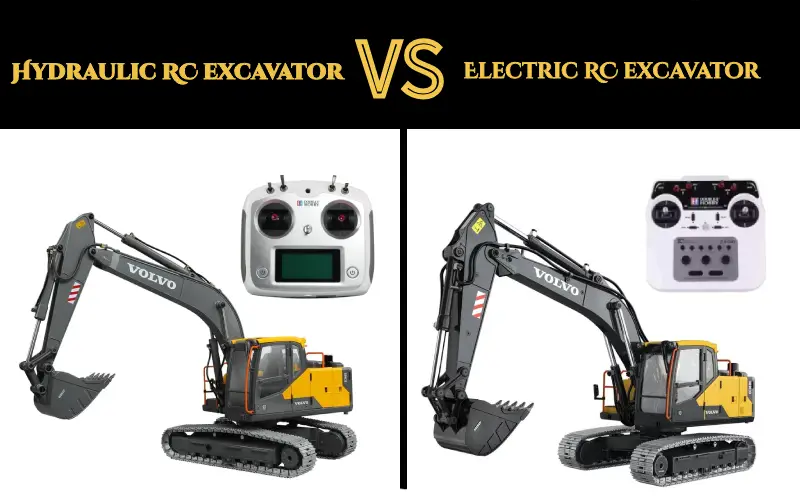
When it comes to RC construction equipment, Double E is a trusted name known for its realistic and durable RC construction models. Two standout products in the lineup are the Electric RC Excavator and the more advanced Hydraulic RC Excavator licensed Volvo models..
So, what’s the difference? And which RC construction equipment should you choose?
Electric RC Excavator – Best for Beginners

Double E Hobby E010 Electric Remote Control Excavator Key Features
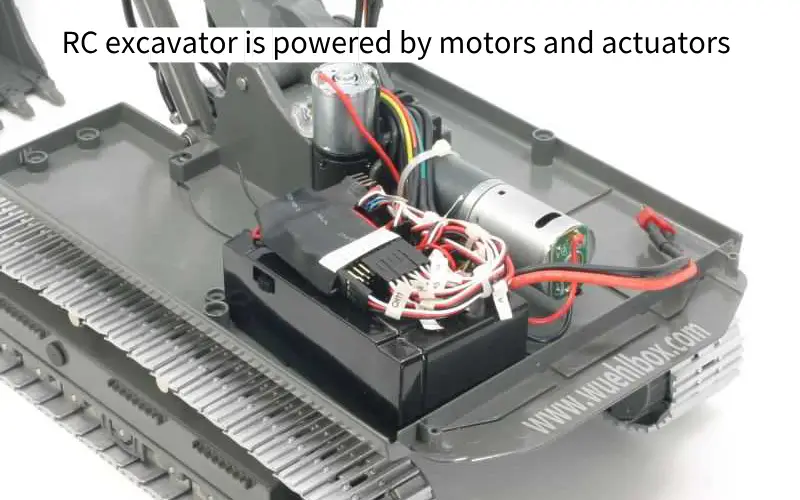
The Electric RC Excavator is powered by motors, actuators, and gears, without the use of real hydraulic fluid. Double E E010 model comes with a 2.4GHz remote featuring lights control and an option to install a sound kit. Built with durable metal and aluminum alloy parts, this model is heavy-duty and designed for lasting performance with limited maintenance. It includes accessories like a quick-release coupler, wide bucket, gripper, and sound box. The excavator offers full movement capabilities, including boom, stick, bucket actions, 360° rotation, driving, and steering. Available in a 1:14 scale, it is attractively priced at around $799 USD, making it a great choice for beginners and RC construction hobbyists alike.
Pros
Great for beginners and teenagers (ages 14+)
Low maintenance
Budget-friendly
Ideal for backyard play
Suitable for different terrains
Good battery life
Cons
Less realistic motion compared to hydraulic models
Limited power for heavy digging or lifting
Not realistic inner build
Hydraulic RC Excavator – A Serious Hobby Machine

Double E Hobby E111 Hydraulic Excavator Key Features
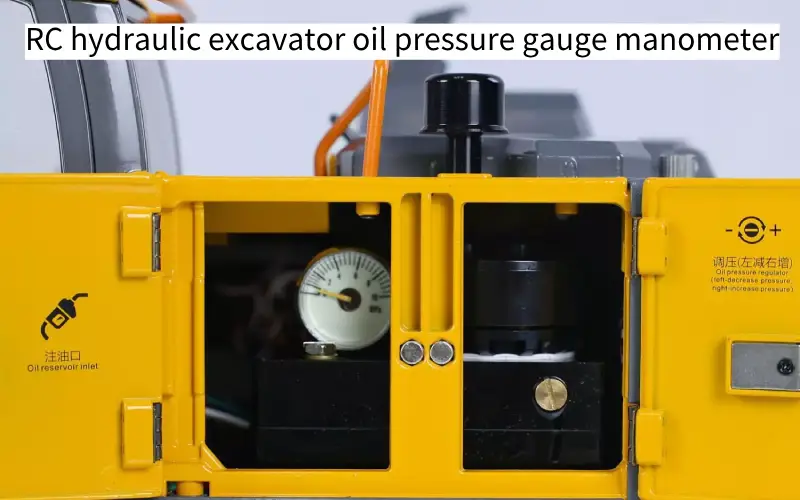
Double E E111 Hydraulic RC Excavator stands out with its true-to-life hydraulic system, utilizing real fluid and pumps to deliver authentic power and movement just like heavy construction machinery. Crafted entirely from robust steel and aluminum components, this model is built for serious durability and powerful performance. It can be equipped with the same metal parts accessories as the electric version, such as a quick-release coupler, hydraulic hammer, wide metal shovel, gripper, and sound box for an even more immersive experience. Offering highly realistic digging, lifting, and operational motions, it closely mirrors the functionality of a full-size hydraulic excavator, but also requires significant maintenance and skill to keep it in peak working condition. Fully programmable through an advanced remote system and scaled at 1:14, this machine is perfect for hobbyists who demand precision, realism, and professional-grade performance.
Pros
Incredibly realistic and powerful
Suitable for serious RC hobbyists and collectors
Looks and operates like professional RC grade equipment
Suitable for different terrains
Good battery life
Cons
Much more expensive than electric versions
Requires maintenance (hydraulic fluid, seals, hose etc.)
Not suitable for young teenagers
Heavier and less forgiving if dropped or mishandled

Double E RC Construction Excavators Side-by-Side Comparison
| Feature | Electric Excavator | Hydraulic Excavator |
| Power Type | Electric motors | Hydraulic system |
| Realism | Moderate | Very high |
| Build Material | Full metal | Full metal |
| Price Range | $$$ | $$$$ |
| Maintenance | Low | High |
| Best For | Beginners | Hobbyists and collectors |
| Usability | Outdoor play | Outdoor play |
Final Verdict
Interested in seeing more remote control construction vehicles? Then click the link: RC Construction
Choose the Electric Volvo RC Excavator if you want less maintenance, fun and beginner-friendly model with minimal setup.
Go for the Hydraulic RC Excavator if you’re ready to step into high performance, ultra realistic RC modeling with precise controls. It’s an investment but one that delivers an amazing experience.
Both RC excavators reflect Double E’s commitment to quality and innovation just aimed at different audiences.
Also to mention that Double e Hobby RC construction machines have excellent after sales customer service and also offer spare parts for its products.
Important note: Both Double E Hobby RC excavators are powerful, hobby-grade models—not toys—and should be operated by older kids only under close adult supervision.